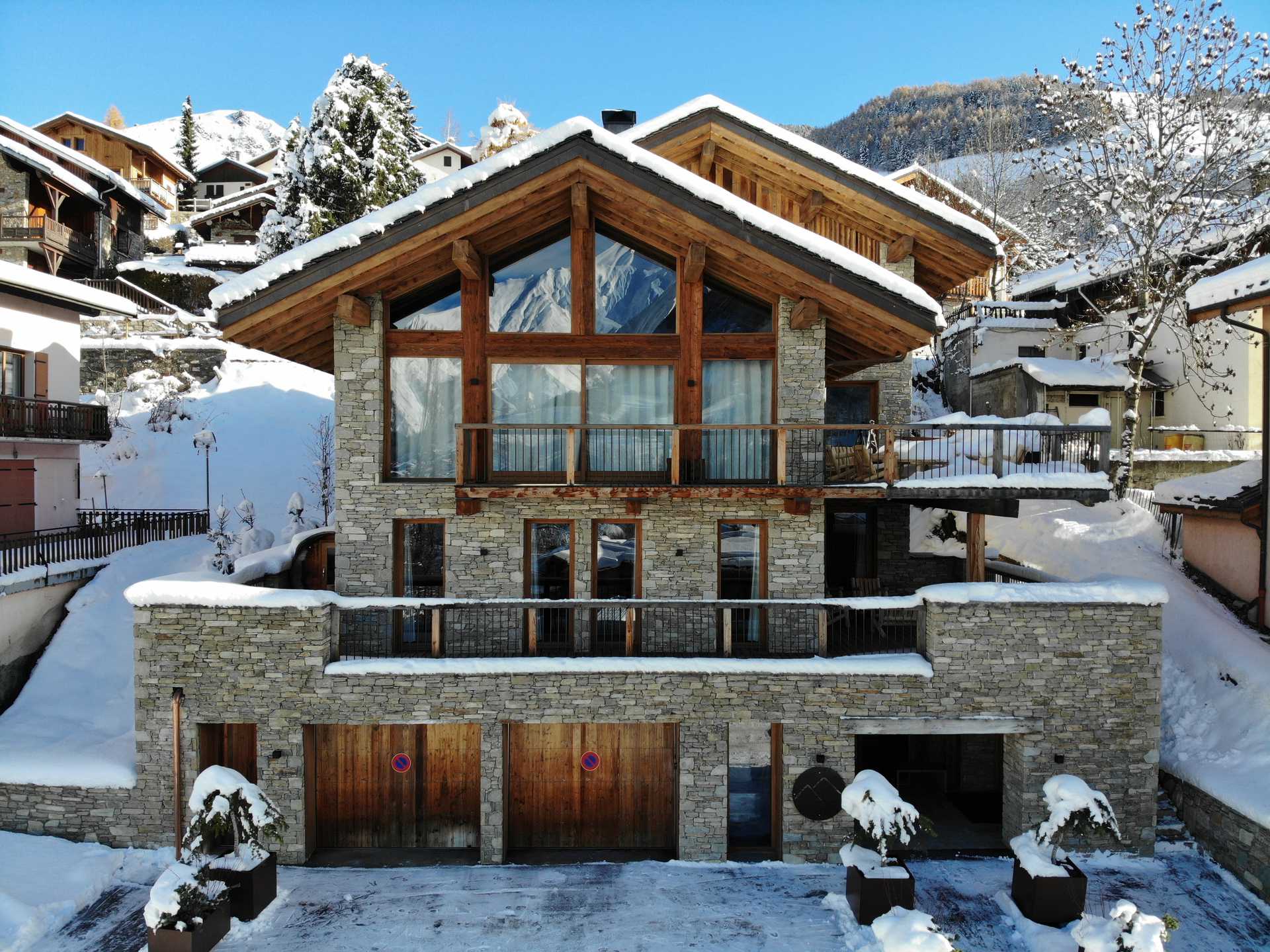
Heating at high altitudes: what is the most cost-effective solution for a property occupied for just a few weeks a year?

Heating at high altitudes: what is the most cost-effective solution for a second home?
Owning a flat or a chalet in the mountains comes with a few specific considerations, particularly when it comes to managing the heating. In Les Ménuires and Saint-Martin-de-Belleville, temperatures can remain below freezing for several weeks in winter, even though many properties are only occupied for a few weeks a year. Should you leave the heating on all the time? Install more efficient electric radiators? Invest in a heat pump? It’s a decision that warrants careful consideration.
For a second home, the aim is twofold: to protect the property whilst you’re away and to keep energy costs down when nobody is there.
Why does heating a holiday home in the mountains require special attention?
The mountain climate: challenging conditions for equipment.
At high altitudes, winter conditions place a heavy strain on heating systems. Sub-zero temperatures, periods of extreme cold and temperature fluctuations increase heating requirements and leave pipes vulnerable to freezing.
In Les Menuires, where properties are situated at high altitude, it is therefore important to have a system that is powerful enough to maintain a suitable temperature, even when outdoor conditions deteriorate.
Insulation also plays a vital role. A well-insulated flat retains more heat and requires less energy to reach a comfortable temperature. Conversely, old windows or poorly insulated walls can lead to significant heat loss.
Vacant properties: an area of expenditure to keep an eye on
A holiday home does not have the same requirements as a property occupied all year round. Between stays, heating all the rooms unnecessarily to a comfortable temperature represents an avoidable expense.
The heating must therefore be able to adapt to periods of occupancy. A programmable system allows you, in particular, to lower the temperature whilst you are away and to switch the heating back on before guests arrive at the start of the season.
This approach is particularly beneficial for mountain apartments used during school holidays or for a few weekends during the season.
Protecting your property: avoiding the effects of the cold
Reducing your energy consumption does not mean systematically turning the heating off. In an unoccupied property during winter, a temperature that is too low can cause pipes to freeze, with consequences that can sometimes be serious: burst pipes, water damage, damage to floor coverings or damage to neighbouring flats.
Damp is another issue to watch out for. Inadequate ventilation, combined with low temperatures, can lead to condensation forming.
The right balance, therefore, is to maintain a temperature suited to the layout of the property, whilst complying with any obligations set out in the insurance policy.
What are the most suitable heating systems for a home at high altitude?
The choice of a heating system for a mountain flat depends on several factors: floor area, insulation, frequency of use, installation budget and technical feasibility.
Here are the main options to consider:
Electric heating: a simple solution for small spaces
Electric heating remains very common in holiday homes in ski resorts. Its main advantage lies in its simplicity: the radiators are easy to install, do not require a plumbing system and allow each room to be heated independently.
For a studio or a small flat in Les Menuires, this solution may be suitable, particularly when the property is only used occasionally.
There is, however, a difference between older convector heaters and thermal storage radiators. The latter store heat in a material or heat-transfer fluid, then release it gradually. They generally provide a more even feel of warmth and greater comfort.
PLEASE NOTE, however: an inertia radiator does not automatically consume less electricity than another electric radiator of equivalent power. The savings depend mainly on the control system, the programming and the insulation of the property.
Key takeaway: electric heating is an affordable solution for small spaces, provided you choose programmable equipment and know how to use it effectively.

Heat pumps: a worthwhile long-term investment
A heat pump works by extracting heat from the outside environment and transferring it into the home.
When correctly sized and installed, it can offer excellent energy efficiency. According to ADEME, a properly adjusted air-to-water heat pump can be three to four times more efficient than direct electric heating.
In mountainous areas, however, outdoor temperatures must be taken into account. The performance of an air-source heat pump decreases as the temperature drops. It is therefore important to consider choosing a model suited to the local climate and whether supplementary heating may be required.
The initial investment is also higher than for standard electric radiators.
In a block of flats, installing an outdoor unit also requires a prior check of the block’s management regulations and any necessary authorisations, particularly if the work alters the external appearance of the building.
Key point: a heat pump may be a worthwhile option for a property that is used regularly, but the installation costs and technical feasibility must be assessed before proceeding.

Wood or pellet heating: cosy warmth in the mountains
A wood-burning or pellet stove is particularly well suited to the atmosphere of Alpine homes. It provides welcome warmth and can be a useful addition to an existing heating system.
The cost of fuel, however, depends on the type of wood, its quality, how it is packaged and the availability of supplies in the resort.
This solution also involves several constraints: having storage space, regularly refuelling the appliance, emptying the ashes and carrying out maintenance.
Annual maintenance of the appliance and chimney sweeping must be carried out in accordance with current regulations. ADEME emphasises, in particular, the importance of professional maintenance to ensure safe and efficient operation.
For a second home left unoccupied for several months, wood-burning heating is less practical as the sole heating solution. It requires human intervention and does not always automatically maintain a minimum temperature.
Key point: Wood and pellets are a good option for owners who are regularly present, but are less suitable for fully autonomous management of the property.

District heating: how can you keep your costs under control?
In many residential blocks in Les Menuires, heating is provided by a communal system.
Heat is therefore shared amongst several flats, and the costs are divided amongst the co-owners in accordance with the terms set out in the co-ownership agreement.
This system has one advantage: the owner does not have to manage the maintenance of their heating equipment individually.
On the other hand, they sometimes have less freedom to adjust the temperature in their home. Some blocks are fitted with thermostatic valves, individual meters or heat cost allocators, which allow residents to adjust or monitor their consumption.

To keep your spending under control, it is worth checking:
- The method of allocating heating costs
- The presence of individual temperature control
- The condition and balancing of the central heating system
- The quality of the building’s insulation
- The programming options within the flat
In this context, the savings depend as much on the central heating system as on the equipment installed in each flat.
Which heating system is actually the most economical for a second home?
There is no one-size-fits-all answer. For a flat occupied for only a few weeks a year, the installation cost must be weighed up against the savings that can actually be made during the periods when it is in use.
A high-performance system may take several years to pay for itself if the property is rarely occupied. Conversely, a well-managed electric heating system can perfectly meet the needs of a small flat used only occasionally.
Here is a comparison of the main heating solutions:
| Heating system | Installation cost | Running cost | Best suited for |
|---|---|---|---|
| Electric heating | Low to moderate | Variable to high, depending on insulation and usage | Small apartments, limited floor areas or occasional occupancy |
| Heat pump | High | Potentially low if the system is correctly sized | Apartments or chalets occupied regularly, with a suitable installation |
| Wood-burning or pellet heating | Moderate to high | Variable, depending on fuel prices and frequency of use | Properties occupied regularly, with sufficient storage space |
| Communal heating | Depends on the existing system | Depends on service charges and the cost allocation method | Apartments in buildings equipped with a communal heating system |
Key takeaway: There is no universally most economical solution. The right choice depends on the existing heating system, the property’s insulation, its size and the number of weeks it is occupied each year.
For example, for a small studio flat or a mountain flat occupied for a few weeks a year, programmable electric heating is often a sensible choice from a financial point of view, particularly if the system is already in place.
For a larger flat, occupied regularly in both winter and summer, a heat pump may be worth considering, subject to a technical and financial assessment.
Finally, where a property already has an efficient district heating system, replacing the individual heating system does not necessarily make sense.
The truly cost-effective heating solution for a second home is therefore one that strikes a balance between a reasonable investment, controlled energy consumption and protecting the property whilst you are away.
5 tips for reducing your heating bill when your home is unoccupied
There are a few simple habits that can help you better manage the energy consumption of a second home without necessarily having to carry out major works.
1. Install a programmable or smart thermostat
A programmable thermostat automatically adjusts the temperature to suit the times when the property is occupied. With a smart model, you can control the heating remotely via your smartphone. This allows the owner to plan their arrival in Les Menuires without heating the property unnecessarily for several days.
2. Use the frost protection setting when conditions allow
During a prolonged absence, the frost protection setting limits the operation of the heating whilst maintaining a minimum level of protection against excessively low temperatures. ADEME recommends this solution for absences lasting several days. However, you should check that this protection is sufficient for the pipework and the most exposed areas of the property.
3. Improve the insulation of windows, doors and walls
Old windows, worn seals and poorly fitting doors contribute to heat loss. Replacing seals, improving the draught-tightness of openings or considering insulation work can reduce heating requirements in the long term.
4. Close the shutters and minimise heat loss
Closing the shutters whilst you are away helps to minimise heat exchange through the windows. Suitable curtains and high-quality draught excluders also help to improve thermal comfort.
5. Plan to bring the temperature up before you arrive at your holiday home
Rather than leaving the heating on at a comfortable temperature all week, it is better to programme a gradual increase in temperature before you arrive. The time required will depend on the insulation, the floor area and the capacity of the heating system.
Mistakes to avoid when leaving your flat empty in winter
An unoccupied property requires a few precautions. Certain mistakes can lead to significant costs, even when the heating appears to be set correctly.
Here are the main points to bear in mind:
- Turning the heating off completely without taking precautions: in very cold weather, pipes can freeze, particularly in areas that are poorly heated.
- Neglecting the pipework: pipes located near external walls, in cupboards or in unheated rooms require particular attention.
- Forgetting about windows and draughts: faulty seals can allow cold air to seep in and increase energy consumption.
- Leaving the water heater running unnecessarily: during a prolonged absence, switching it off may be an option if the installation instructions and health and safety precautions allow it.
- Failing to check the heating before leaving: a faulty radiator, an incorrectly set thermostat or a boiler breakdown may go unnoticed for several weeks.
An additional precaution is to check your insurer’s recommendations. Some policies require specific measures to be taken in the event of a prolonged absence, particularly regarding turning off the water supply or draining the plumbing.
Second home in Les Menuires: why is it essential to check on your property regularly?
Choosing a suitable heating system is the first step. However, you must also ensure that the system is working properly when the owner is away from the resort.
For owners who live far from Les Menuires or Saint-Martin-de-Belleville, regularly checking on their flat can quickly become a challenge. A heating failure, a water leak or an abnormally low indoor temperature can have serious consequences if no one takes swift action.
Local monitoring enables you, in particular, to:
- Check that the heating is working properly before and after stays.
- Monitor the indoor temperature during periods of extreme cold.
- Identify any signs of damp or leaks.
- Report technical issues promptly.
- Prepare the property before the owners or tenants arrive.
- This is also why it is beneficial to use a professional based directly in the resort.
At Agence des Alpes, we support property owners in Les Menuires and Saint-Martin-de-Belleville with their property projects, in particular through our rental management and property monitoring services.
A well-maintained property, properly prepared and regularly monitored, helps to preserve your property portfolio, minimise unpleasant surprises and offer holidaymakers a more comfortable stay.
Conclusion: the right heating system to protect your investment
For a second home in the mountains, the most economical heating system isn’t necessarily the most sophisticated. A programmable electric system may be sufficient for a small flat, whilst a heat pump may be a suitable option for a property used more regularly. In any case, insulation, temperature control and monitoring whilst you’re away remain essential.
Do you own a flat or a chalet in Les Menuires? Contact Agence des Alpes to find out about our rental management and property support services. Our local team will help you look after your property, even when you’re not in the resort.
FAQ – Frequently asked questions about heating in a second home in the mountains
What is the most economical heating system for a flat in the mountains?
For a small flat occupied for a few weeks a year, programmable electric heating is often a suitable solution, especially if the system is already in place. For a larger property or one used regularly, a heat pump may offer better energy efficiency, provided the building and climatic conditions are suitable.
Should you leave the heating on in a holiday home during winter?
It is not necessary to maintain a comfortable temperature throughout an entire absence. However, switching the heating off completely may pose a risk of freezing. A frost-protection setting or a suitably reduced temperature will protect the property, subject to the configuration of the systems and insurance requirements.
What temperature should be maintained in an unoccupied flat in Les Menuires?
There is no one-size-fits-all temperature. The setting depends on the insulation, the property’s aspect, the pipework and the fittings. The frost-protection setting is an option during a prolonged absence, but it is still essential to check vulnerable areas. The insurer’s guidelines must also be followed.
Is a heat pump effective in the mountains?
Yes, provided you choose a system suited to the outdoor temperatures found at high altitudes. The performance of air-source heat pumps decreases as temperatures drop. The sizing of the system, the quality of the installation and the possible inclusion of a supplementary heating system are therefore crucial.
How can you prevent pipes from freezing in a holiday home?
You need to maintain a suitable temperature, insulate the most exposed pipes and check your insurance policy’s frost protection guidelines. Depending on the installation and the professional’s recommendations, it may also be necessary to shut off the water supply or drain the system.
Charly.G